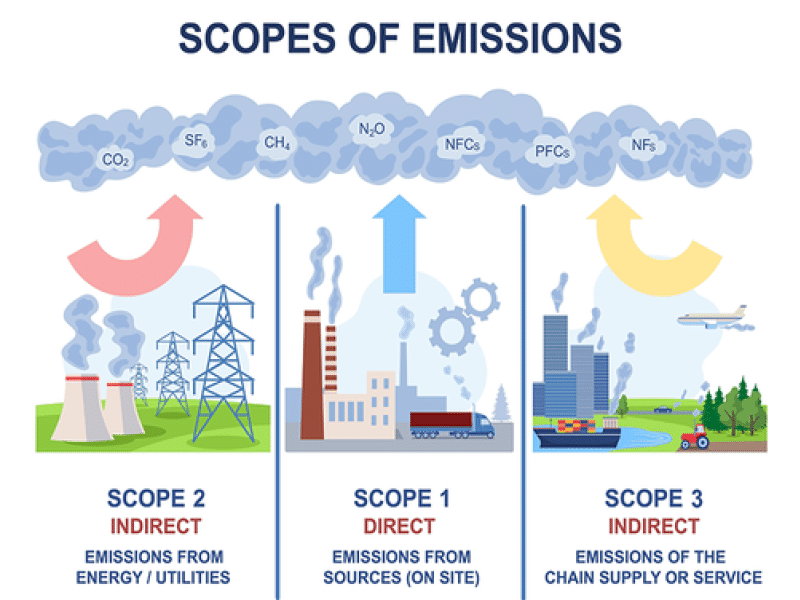
Ever wondered how much impact your favorite coffee or gadget has on the planet, not just when you use it, but tracing all the way back through every step of how it was made and transported? That incredibly complex footprint, particularly the emissions linked to a company's supply chain, is known as Scope 3 emissions. And figuring it out? It's one of the biggest puzzles facing businesses today. 

Scopes of Emissions

Imagine a huge global corporation with thousands of suppliers spread across continents. To get an accurate picture of their Scope 3 footprint, they need to collect sustainability data – like emissions data – from each supplier, and then from their suppliers, and so on.

As Aurel Stenzel, Ashoka Fellow and founder of SINE Foundation, puts it, “getting this data is a very collaborative effort. No company can solve this by themselves". 

For years, companies have been stuck. They relied on outdated, inefficient methods, like wading through tens of thousands of emails loaded with Excel attachments from suppliers, only to manually upload that data into their own systems. This happened because different technology platforms (like SAP, Microsoft, IBM) were built like "walled gardens," making it difficult to share information seamlessly between them. On top of that, there was fear – fear of losing control and lack of trust in exposing sensitive business data. Plus, there was inconsistency in how sustainability metrics were even measured. 

This is where the SINE Foundation steps in. 

Founded in Berlin in 2020 as a non-profit, SINE's core mission is to create a more collaborative and sustainable economy by enabling the flow of trusted sustainability data. They aren't a software company selling solutions or a firm collecting data; Aurel emphasizes, "we are not collecting anything" and "we are not a software provider". Think of them instead as a crucial connecting piece. They build the pipes and define the language so that sustainability data can flow freely and reliably between different software providers and companies. 
Aurel and his foundation are part of the cohort of tech-oriented Fellows supported by Lenovo through its global partnership with Ashoka.  SINE's work focuses on two key areas: 

1. Speaking the same language: They work on semantic interoperability, ensuring everyone agrees on standards for measuring and reporting data. It sounds simple, like deciding between tons or kilograms for emissions, but in the real world, these details get extremely complex. 

2. Building open pathways: They develop technical interoperability – the open-source technology and standards that allow data to move smoothly from one system to another. “It’s like being able to send an email from Gmail to Yahoo without even thinking about the different systems behind the scenes”, explains Aurel. 

Initially, much of the drive for this data sharing came from regulations, like mandatory Scope 3 reporting or EU regulations on deforestation. However, regulatory pressure has become less certain as a result of recent global political shifts. Because of this, SINE highlights another powerful truth to persuade companies: digitizing your value chain for sustainability also makes your supply chain more resilient.

Better data visibility allows companies to spot and react quickly to potential problems or bottlenecks deep within their supply chain. As Aurel puts the new frame, "Yes, digitalizing your supply chain can make it more sustainable, but it can also make it more resilient at the same time". Plus, open data flow means suppliers can compete not just on price, but on their actual sustainability performance. 

How do they achieve this widespread change? SINE recognizes that persuading businesses individually is neither efficient nor scalable. Their strategy is to work with coalitions of powerful companies. Groups like the World Business Council for Sustainable Development (for carbon transparency), the Smart Freight Center (for logistics), and many other initiatives focusing on broader impact data. By getting these influential players on board, they can collectively convince major software platforms to integrate SINE's open standards and technology, effectively opening up proprietary systems. This helps overcome the challenge where companies hesitate to be the first to share data – what Aurel calls the "the game of chicken," where the perception is that "the one moving first loses".  

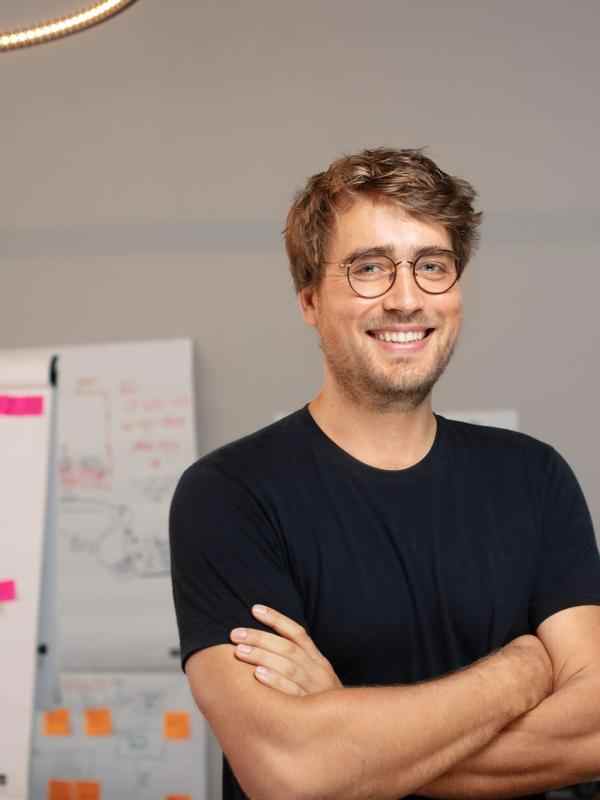
Aurel Stenzel Fellow
Aurel Stenzel, founder of SINE and Ashoka Fellow

SINE Foundation sees itself as a vital piece in the puzzle of creating systemic change for a more sustainable economy. They argue that many market failures exist because information isn't readily available. Making sustainability information accessible is the fundamental first step for the market to drive improvements. "We see a lot of market failure due to information asymmetries, and if don’t know where to improve or what to improve, this will never change". 

SINE's impact is significant. Their work on the Partnership for Carbon Transparency (PACT) has led to their methodology becoming a de-facto industry standard, adopted by over 2,500 companies and integrated into more than 35 software solutions. Aurel reflects on this achievement with pride, recognizing how such a small organization can build foundational data exchange protocols, much like the early creators of the internet. 

Their dream? To be that quiet, foundational protocol – working in the background, enabling the essential flow of sustainability information that allows corporations to measure, report, and act on their impact. By tackling the complex technical, governance, and political hurdles of data sharing, SINE Foundation is actively transforming how businesses operate, paving the way for a more transparent, resilient, and ultimately, sustainable global economy. 


*The insights, ideas and messages in this article have all been extracted and developed by humans. An AI assistant supported the writing. 

Ashoka and Lenovo are partnering to make technology a transformative force for positive change through social innovation, working closely with Ashoka Fellows from across the world. Learn more.